

ASL MRI & CBF Mapping
Arterial Spin Labeling MRI & Cerebrovascular Perfusion Mapping
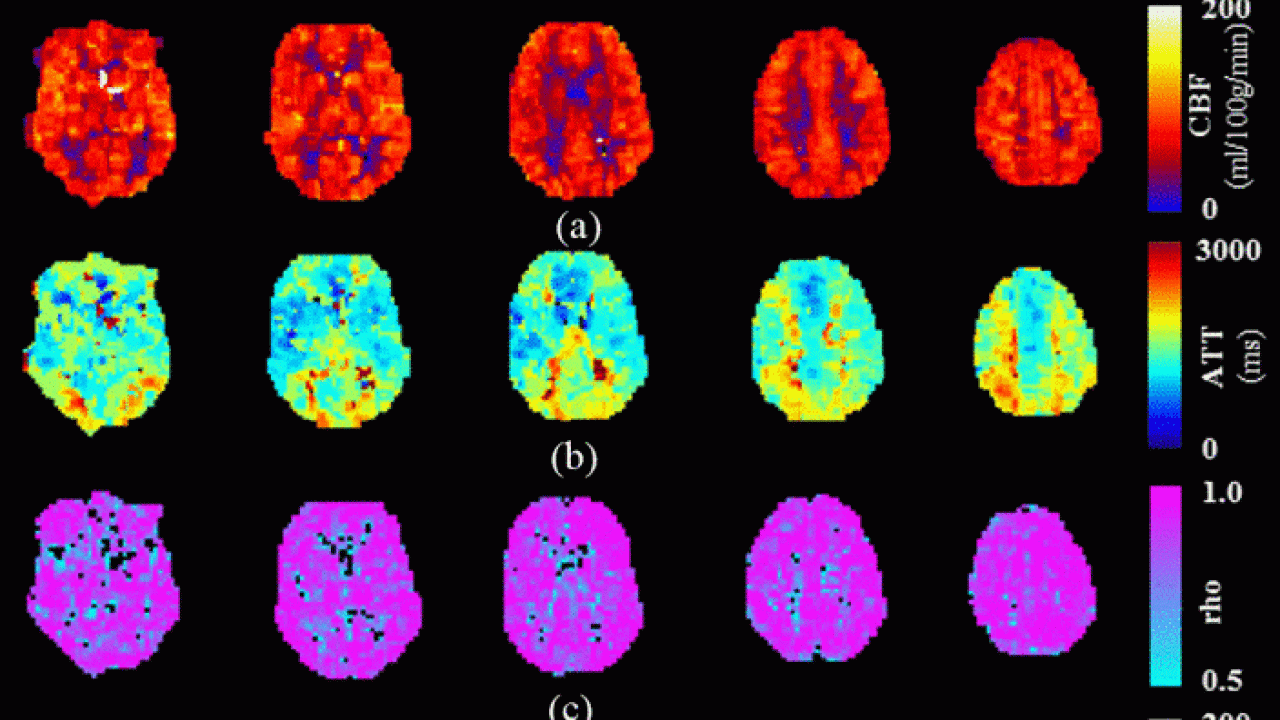
Arterial spin labeling (ASL) is a non-invasive MRI technique that uses magnetically labeled blood water as an endogenous tracer to measure cerebral blood flow (CBF) and arterial transit time (ATT). The IRIS Lab has been a leader in advancing ASL acquisition and analysis, developing deep-learning methods — including 3D convolutional neural networks — to generate high-fidelity parametric perfusion maps from noisy multi-delay ASL data. The lab has also contributed to large-scale clinical trials such as the U.S. POINTER study, optimizing ASL protocol parameters (e.g., inversion time selection) for deployment across multi-site imaging cohorts. These methods enable quantitative, reproducible measures of brain perfusion that are critical for understanding cerebrovascular health across the lifespan.